Workshop meets every Saturday from 12pm to 3pm PST, for 10 weeks. Starting April 6, 2026 - Ending June 13, 2026.
Anim 09 – Animation Learn to Layer Spring 2026
Event Description
Enrollment For This Workshop Closes on April 10th, 2026.
LEARN TO LAYER: Would you like to animate faster, be more agile in making changes, and work more efficiently with a clean graph editor? It might be time to add the Layered workflow to your skillset. The Layered workflow is one of many approaches to animation, and it can offer several practical advantages for speed, iteration, and collaboration.
1. Faster Blocking and Idea Exploration
In a traditional Pose-to-Pose workflow, an animator: 1. Creates key storytelling poses. 2. Adds breakdowns. 3. Splines and refines. This works well for clear planning but often requires committing early to specific poses and timing. A Layered workflow builds the animation in passes, adding motion progressively. Because motion is layered: Animators can quickly rough in movement without worrying about every limb. Early passes can be very simple and exploratory. Timing and intent can be tested before committing to detailed poses.The Benefit = Animators can block faster because they don’t need a perfect pose before moving forward.
2. Faster Feedback from Directors and Supervisors
Layered workflows make it easier to show early versions of the performance. Instead of waiting for full pose setups, an animator can present: Root motion and acting intent, Rough head and eye direction, Simple arm gestures. This allows supervisors or directors to give feedback on: Acting intention, Emotional tone, Timing and beats, before the animator spends time polishing. The Benefit = Earlier feedback, Less wasted polishing, Faster iteration cycles. This is particularly valuable in production when schedules are tight.
3. Easier Iteration When Notes Come In
Animation notes frequently change: “Make the character feel more confident”, “Delay the reaction”, “Turn the head earlier”. In a Pose-to-Pose Workflow, changes often require rebuilding multiple poses because poses contain the entire body, adjustments can ripple through the shot. In a Layered Workflow changes can be isolated: Acting note → adjust head/eyes layer. Timing note → adjust root/body layer. Gesture note → adjust arm layer. The Benefit = Faster revisions. Less risk of breaking other animation.
4. Cleaner Performance Development
Layered workflows help animators focus on one performance element at a time. Example: Body mechanics, Weight and balance, Gestures, Head direction, Facial performance. This mirrors how actors perform: Body intent first, Gestures next, Facial nuance last. The Benefit = Performances can develop more naturally and clearly.
5. Better Collaboration in Production Pipelines
Layered animation can be easier for teams. Leads and Fix / Polish teams can more easily adjust body motion. Layout changes can be incorporated without destroying detailed work. The Benefit = Improved flexibility across departments.
6. Reduced Risk During Early Production:
Layered workflows allow animators to keep early work loose and adaptable. The Benefit = Less wasted effort when production shifts. (Think: Camera reframing, Timing changes, Dialogue edits, or Story revisions.)
Many would say the Layered workflow is an opposite approach to the Pose to Pose workflow. Pose to pose Workflow is fundamentally about setting few keys with a larger number of controls that make up those keys. It focuses heavily on storytelling posing. Layered workflow is about setting many keys, using very few controls. It’s focusing heavily on storytelling timing.
I’ve been using the layered approach for the last 20 years professionally. Like all workflows it has its pros and cons. In this class we will be learning the workflow through small assignments, working our way up to something more complex. We will focus on both physicality as well as performance.
Curriculum: Animation Learn to Layer
- Head Turn / Take / Settle
- Character Sitting Down
- Wall Climb
- Simple Dialogue
The Learn to Layer workshop approaches layered workflow through four progressively more complex assignments, each designed to build control, speed, and clarity in performance.
In Head Turn / Take / Settle, students focus on the core idea of layering by first establishing timing, directional intent, and body support before adding head, eyes, and final settle details, learning how even a simple action can be built in clear passes.
In Character Sitting Down, the emphasis shifts to weight, balance, and mechanics, with students layering root movement, hips, torso, and limbs to create a grounded action before refining overlap and detail.
In Wall Climb, students apply the same pass-based process to a more physical shot, blocking major body mechanics and contact points first, then layering in torso adjustments, limb coordination, effort, and secondary motion.
Finally, in Simple Dialogue, students use layered workflow to build performance from the inside out—starting with body rhythm and posing, then adding gestures, head direction, eye focus, and subtle acting beats—so they learn how layering supports faster blocking, earlier feedback, and more efficient revision across both physical and performance-driven animation.
Throughout the workshop, Michal will lecture and provide examples and live demonstrations in Maya, as well as providing syncsketch notes and feedback on your work.
GET TO KNOW YOUR INSTRUCTOR:
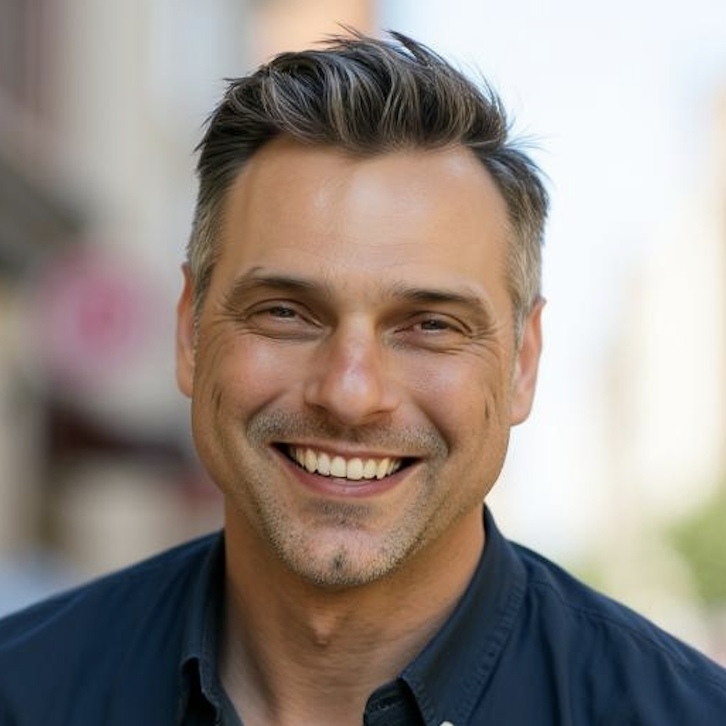
Michal Makarewicz is a multiple award-winning former Pixar veteran, with 20+ years of experience. During his 20 years at Pixar, he held various roles, including Fixer, Animator, Directing Animator, Supervising Animator, Director (Disney+), and Intern Training Lead.
He contributed to some of Pixar’s most beloved films, including Toy Story 3 & 4, The Incredibles 1 & 2, Finding Dory, Brave, Cars 1 & 2, WALL-E, Up, Soul, and Ratatouille, among many others.
Beyond animation, Michal played a key role in Pixar’s educational initiatives, leading the studio’s internship program and employee training series. He also had the honor of mentoring under Pixar co-founder Ed Catmull.
Michal’s work has earned him multiple accolades, including two Annie Awards (Soul, Ratatouille), as well as nominations for a VES Award (Incredibles 2) and a Reuben Award (Soul). He was also honored with a scholarship in his name at Vancouver Film School.
After Pixar, Michal became Head of Studio Animation at SPIRE Animation Studios before joining Skydance Animation as a Supervising Animator.
Michal is the Founder of:
-The Animation Collaborative – A school dedicated to teaching high-level feature animation, story, and character design, led by some of the industry’s top artists.
-ProRigs – A professional-grade 3D rig library with 40+ characters for students and professionals, available for both training and commercial use.
In addition to his studio work, Michal teaches Animation Masterclasses worldwide, partnering with schools and companies.
Ticket Options
Attendee Information :
Age Confirmation*
Frequently asked questions
Workshop Schedule
How Much Does It Cost?
Tuition for this course is $1,600.00, which includes a $200.00 non-refundable registration fee.
Deposits & Payment Plan
We offer the option to register and pay your deposit, and set up a payment plan. To Register for a course and pay the deposit, go here: https://animationcollaborative.com/workshop-registration/ For information on how to make a payment for a Payment Plan, go here: https://animationcollaborative.com/make-a-payment/ You can break your tuition into four easy payments with a Payment Plan. Here are the details of the payment plan. Payment 1: $200, deposit due with registration. Payment 2: $466.67 due on the Monday of the 1st week of the Session. Payment 3: $466.67 due on the Monday of the 4th week of the Session. Payment 4: $466.66 due on the Monday of the 7th week of the Session. *Note: payments are not automatically scheduled. You must schedule them individually. Note: Animation Collaborative accepts Paypal and Checks. To pay by check, just send us an email at with the information below, and mail your check by priority mail, or expedited shipping with tracking to: Animation Collaborative PO BOX 5261 Walnut Creek CA 94596 Information to Include in your email is as follows: Tell us you are interested in registering and are sending a check (for Deposit, Payment Plan, or full Tuition). Please provide the Student's Name, Email, Workshop Selection and Link to your portfolio, or samples of your work. Thanks!